
6 Likes
Not facts but interesting theories, was nice to see. But I totally disagree to the " Hemp type - Drug Type " part. Not realistic to me.
4 Likes
Yes , because of this many people (including me at the begin) belive that Thai Ganja and other tropical / subtropical varieties are “hemp” 
 nothing more wrong than that. How it has originated this wrong idea?
4 Likes
The scientific community is still divided on whether there is just one species, Cannabis Sativa, or up to three, C. sativa, C. Indica, and C. Ruderalis.
I personally see it as three expressions of a single species. The closest analogy i can think of is Brassica oleracea. Just like how cannabis was bred into thin leafed tall sativa, broad leafed squat Indica, or non psychoactive hemp. Brassicas were bred into broccoli, kale, brussel sprouts, etc.
Now all three categories of cannabis are all Cannabis Sativa, but they are grown as different crops, for different purposes. I think that’s the way that the most people will understand. “What is this plant’s final purpose? Why is it being grown?” When the host says we’re looking at “drug type” she’s saying that the video is only focusing on cannabis grown specifically for the psychoactive and medicinal properties flower, hash, etc.
On another note. “Yes , because of this many people (including me at the begin) belive that Thai Ganja and other tropical / subtropical varieties are “hemp”. Nothing more wrong than that. How it has originated this wrong idea?"
Originally species were defined by science based taxonomy. Observable physical characteristics and their similarities/differences to other species. In 1753 Carl Linnaeus first described Cannabis Sativa based on European low thc hemp varieties. That’s why people thought tropical sativa was hemp. Because Europeans defined hemp first. Now we have genetic sequencing which has showed us that lot of our old classifications are incorrect, but science is slow moving, so a lot of new info still isn’t common knowledge.
2 Likes
I don’t believe there is any Indica , Sativa if we purely talk about genetics. But we can use “Indica type” or “sativa type” when we talk about because has becomes so rooted on the cannabis community vocabulary that to completely delete the word “Indica” is not functional anymore. Still I believe it will be better not to use at all. Of course is personal. But when modern biologist have researched for differences on the DNA they was not able to find any difference between the two and also when I ask "what is Indica ? What is Sativa ? " To the Indica/sativa theory supporters I get everytime different answers that do not match.. what is Indica and what is Sativa to you?
3 Likes
For example , Thai Ganja of my area (Hang Krarok, Hang Suea..) : it is a “Sativa type” , think leaf , long internode.. but high THC level and definetly breed for “drug” or better said “psychoactive effects”
Also you can find many text of OG breeders where they tell that they are using tropical and subtropical varieties (think leaves) to increase THC levels on the desertic Kush/broad leaves varieties..
So who is Indica or sativa?
For me All Ganja is Sativa. I totally dismiss the existence of “Indica” , without exceptions
We better talk about climate areas of provenience instead like “tropical” “subtropical” “temperate”
(Far to pretend to be the holder of the truth, I enjoy the debate)
3 Likes
I agree with you. They are genetically the same plant. My answer goes back to the Brassica analogy. Is this a broccoli, or is it a brussel sprout? They are different enough to know they’re different even if they’re the same plant.
I feel like trying to recategorize the common language used for the plant will sow more confusion than anything. Just because Indica isn’t a scientific classification anymore doesn’t mean we don’t all know what someone means when they talk about an Indica.
I think the better question to ask is, do we want specificity or generality when describing cannabis. For instance if I’m looking for a sativa, and I’m given hemp, I’ll be upset about that. I technically got what I asked for, but we all know i wasn’t asking for hemp.
I like thin leaf/ tall/tropical, broad leaf/short/desert when talking about plants, but keep Indica/Sativa as categories for an end product based on what type of plant produced it.
3 Likes
To be fair I say like this because despite I have tried to read and study I cannot understand what Indica is and why (for what reasons) should or can be considered different
Also Hemp.. Hemp is all ganja that is below 0.3 % THC content , but is not a specific genetic or another different plant.
Same genetic can give you “hemp” individuals and not, so if you ask for Sativa and they give you “Hemp” they are not wrong
3 Likes

De Bacco University - notice how he use to add the word “type” to the terms “Indica” “Sativa”
This is because he is a studied person and he knows that we can use this terminology “safely” only adding this clarification that is specific of morphology
3 Likes

3 Likes
I think what we are reaching is a division between those who know and those who don’t, and specifically the language barrier and misunderstandings that can come from it.
I find the fact that Indica is no longer a valid term from the genetic perspective as more of a “fun fact” about the plant. It’s very interesting and important to growers and breeders, but the common person at the dispensary doesn’t really need to know that to get what they’re looking for. The fact that Indica and sativa have been used as a way to categorize flower for long enough that they have entered the common lexicon tells me that the terms are here to stay.
That being said, I think the idea of standardizing the jargon surrounding cannabis is an effort worth striving toward. At the end of the day I would rather be understood and understand the people around me than be “correct” and have no one know what I’m talking about.
Ps. This has gone far enough off topic, and is an interesting enough discussion to possibly warrant it being its own topic rather than being buried under a video about the origins and evolution of cannabis.
3 Likes
Why out of topic? We are talking about the evolution of cannabis right? So also the evolution of the names related. To begin with the terms Indica and sativa they are part of that evolution discovery. But if we discover that they are not scientifically correct why to insist to use them?
And same it goes for “Hemp” .. in that video the woman say that “Hemp” is a thin leaf. But is not true as many CBD ganja (hemp) is actually broad leaf
3 Likes
Refine the canna culture is essential to gain worldwide liberalization. Shops cannot label products with names that are not correct.
3 Likes
“Why out of topic? We are talking about the evolution of cannabis right? So also the evolution of the names related.”
That’s a good point that I hadn’t considered. Ijust felt like the conversation moved into the territory of etymology and that feels like the sort ofthing that could be a topic unto itself.
“Refine the canna culture is essential to gain worldwide liberalization. Shops cannot label products with names that are not correct.”
Again, 10/10, that’s a great point. I’m certainly not advocating for growers/providers being uninformed or misinforming their customers. I think a better explanation is that the terms “Indica and Sativa” to the average consumer are no longer being used to describe the plants, but their effects. Sativa goes up Indica goes down. (I realize there are probably exceptions)
What I’m interested in is, if you don’t believe the terms Indica and Sativa should be used anymore, how would you replace them?
3 Likes
I think that the effects is also an important reasons we should get rid of that nomenclature. The statement that Sativa get you up and Indica down is not correct. If is about effects it is more correct to talk about chemo types (the list of compounds present) and also in that case is not a perfectly exact science because many small compounds are not well known yet and also because effects are relative to the user condition and the circumstances, but at least can provide more useful informations compared to a mere “Indica/sativa” that (maybe) do not even exist..
To get back to your topic I have found this documentary, very interesting:
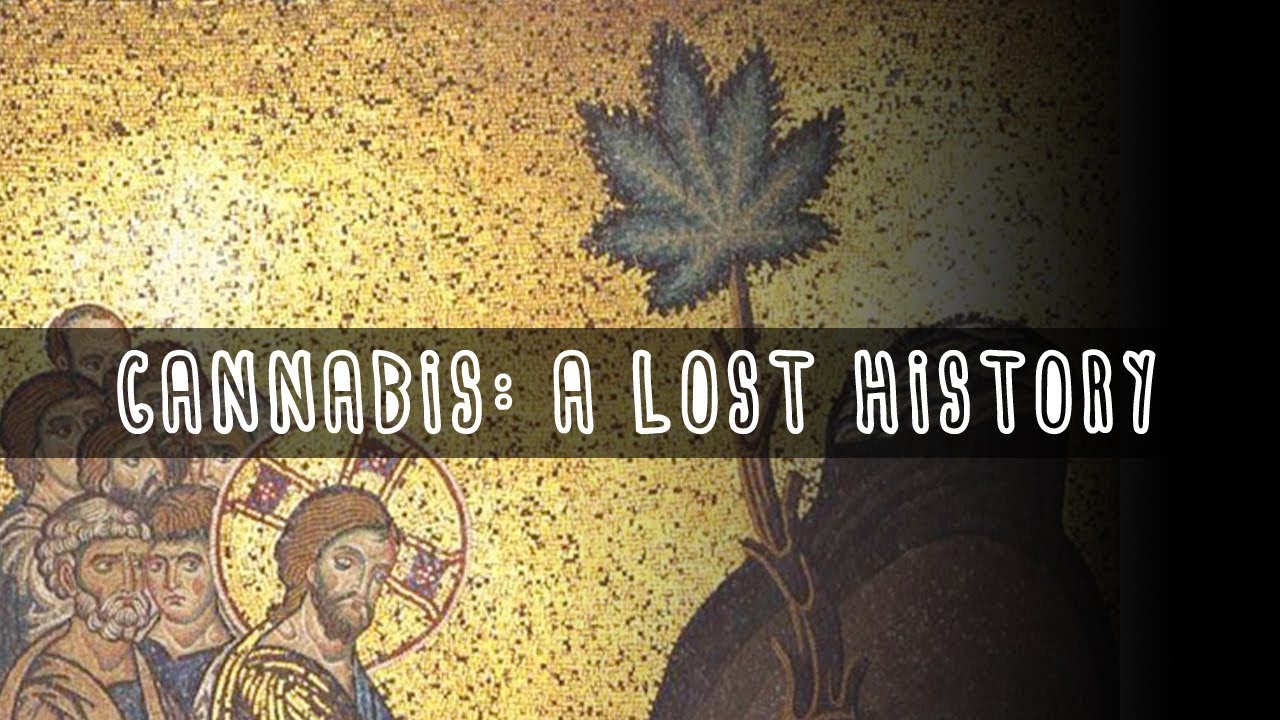
3 Likes
I came across a very thorough research paper that goes into depth about the classification of Indica vs sativa using genomic data. Ultimately their conclusion is the same as yours. There is no distinction between Indica, Sativa, or Ruderalis for that matter, on the genetic level. Furthermore, a study done in 2021 that sampled 137 different strains sold at dispensaries found indica and Sativa labeled strains genetically indistinct. Absolutely worth the read.
3 Likes
Yes , I think I'm the future that way to label ganja will totally disappear. Will take time because habit are hard to be changed but unless the research will begin to find more evidence the academic will remove that nomenclature.
Everytime I see the cover of this video I wonder why they have choose a leaf with powder mildew 

3 Likes
You know, I didn't look at the thumbnail too closely before you said something, but you're absolutely right. What an odd choice lol.
3 Likes
I have the eye to see
3 Likes
My pitch for a more comprehensive way to classify cannabis as growers would divide cultivars into six interchangeable groupings. Chemotype, terpene profile, genetic/regional origin (where it is known), plant growth structure, photoperiod vs autoflowering, and regular vs feminized (for seeds specifically).
For instance, your Mekhong Classic with the14/14 thc/cbd expression could be described as a Chemotype II (14/14), linalool dominant 1.2% terpene profile, Thai Landrace, that is a tropical sativa type structure photoperiod plant.
As a grower, that gives thorough information of what type of plant I'm growing, and consumers have a better understanding of what type of experience its flower will produce.
Edit: other categories that should be included. Flower time, indoor/outdoor, and organic/synthetic nutrients.
3 Likes