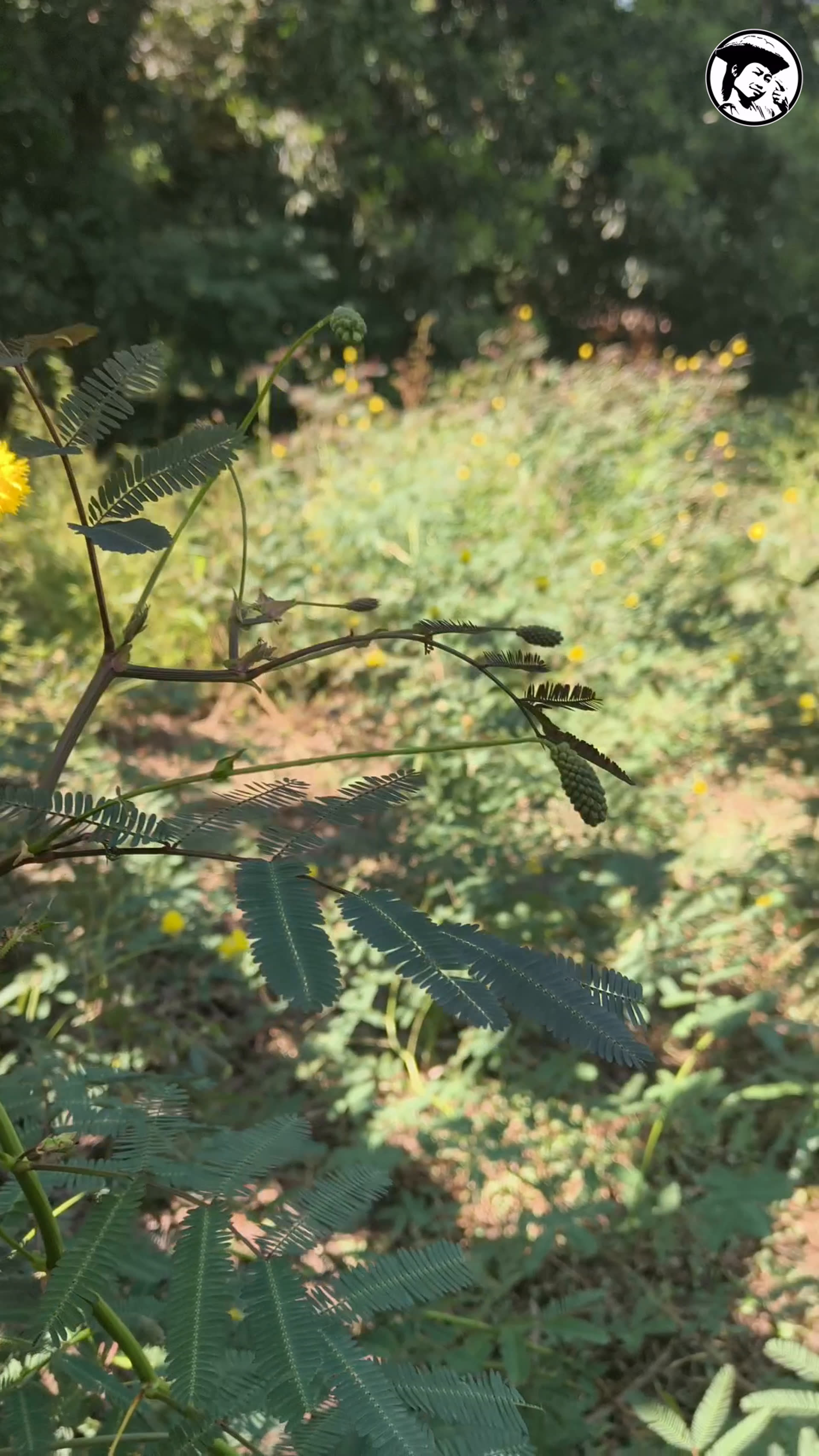
This plant is considered by the most an invasive plant despite being commonly used in Thailand as food.
For years I have been fighting against this plant and finally I have learned to respect her and she actually is very useful
Aside the nutrient beans and stems that you can cook or add raw to salad and other recipes, she is a leguminous plant good for nitrogen fixation this means that if you have her you don't need to add to much compost or manure to the soil for the next crop
In my farm she grow only on my lowest field so she helps to remove the water before I go there and work the soil, but if you wait too long she can become a bit hard to remove
The stems they become like small light woods that they are perfect for mulch
Also is very cute how she move the leaves on touch!
Our farm is full of its cousin false water mimosa (java neptunia) ผักกระฉูด strong stems impossible to pull out from the ground
Google tells this dont know if true:
Traditional Thai Medicine Uses
In local folklore and herbal remedies, the plant is processed (either eaten fresh, dried into loose tea, or ground into capsules) for several specific functions
Strengthening Smooth Muscles & Sphincters: It is widely used to slow down the degradation of internal smooth muscles and sphincters. This makes it a popular remedy for elderly individuals struggling with urinary or bowel incontinence (helping them hold their urine better).
Prostate and Uterine Support: It is traditionally used by men to ease prostate issues and by women to help tone or tighten pelvic muscles.
Energy Booster (บำรุงกำลัง): It is brewed to combat fatigue and physical exhaustion.
Fever and Inflammatory Relief: Like its aquatic cousin, the leaves are crushed or brewed to clear internal heat, acting as a natural antipyretic (fever reducer).
Scientific & Pharmacological Findings
Recent studies (including research published in the Journal of Current Science and Technology) have extracted compounds from Neptunia javanica and verified several therapeutic actions:
Accelerated Wound Healing: Extracts have been shown to significantly enhance cellular movement in human skin cells (fibroblasts), effectively filling in and closing wounds.
High Antioxidants: The plant is rich in alkaloids, flavonoids, and tannins, which protect tissue from oxidative stress and cell damage.
Blood Sugar Management: It demonstrates strong alpha-glucosidase inhibition, which means it slows down sugar absorption in the gut—making it a subject of research for managing diabetes.
Diuretic & Blood Pressure Control: High levels of potassium and natural compounds help flush out excess uric acid/wastes via the kidneys and naturally assist in managing high blood pressure.
Yes , actually also this one is the "false" one, that grow also in the dry. I used to not liked her, but I'm beginning to understand her functionality to the ecosystem
It really feels like so many plants and mainly herbs got labeled as bad or invasive , so humans forget the medicine value and keep nice green deserts as garden , or monocrop near death soil fields ,and buy medicine from pharmacy
Water mimosa (*Phak Krachet*) and *Phak Krachut* belong to the same plant family. The key difference is that water mimosa features a white, spongy sheath surrounding its stems, thrives in water, and has a more tender texture. In contrast, *Phak Krachut* is tougher and grows well on land as well as in water. Both plants in this family offer health benefits.
Such a beautiful writing ! Asian languages are more natural . Like my son signing korean ( i hope its South klKorea)and Japanese kidsongs , but is non verbal still basicly , so im trying to learn a bit Korean . Bet he will like Thai aswell